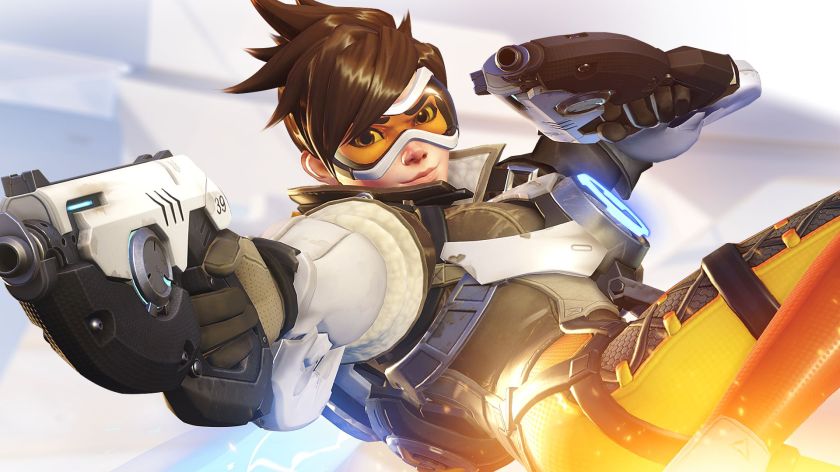
Once relegated to seedy arcades and the basements of trade shows, the world of competitive gaming has since grown into an international phenomenon. Esports, competitive gaming at the professional level, has millions of fans worldwide . Streaming services and sponsorship deals let some professional players earn serious salaries, sometimes in the seven figure range. While the stakes may be smaller at the collegiate level, the passion is the same.
Ansar Lemon, a senior at Cornell, is president of the Esports at Cornell club. The club was started in 2016 as an Overwatch and Starcraft club, but has since grown to be about esports in general. Lemon said the club has seen massive growth since its conception.
“We have 300+ members, and we have a variety of games,” Lemon said. “Overwatch, League of Legends, Hearthstone, Counter Strike: GO, and we’re still adding on games.”
Lemon first became interested in esports because he was a fan of Blizzard Entertainment’s Starcraft series, a sci-fi-themed real-time strategy game where players try to destroy an enemy player’s base while defending their own. The first Starcraft was released in 1998, and is frequently credited for starting the esports scene in South Korea. The second Starcraft game, released in 2010, is commonly considered to be the game responsible for popularizing esports internationally. In recent years the series has declined in popularity, due to newer and more technologically advanced games being released.

“Starcraft used to be the pinnacle of esports, it was like the example of esports,” Lemon said. “I really loved that game, I loved watching tournaments and competitive players compete. That got me interested in esports.”
Lemon became interested in Overwatch, also developed by Blizzard Entertainment, when it was released in 2016. He had wanted to start a club for the game, but instead decided to merge with the Starcraft club, which eventually became the current Esports at Cornell club as more games and teams were added to the roster.
Esports at Cornell is sponsored by Tespa, a network of college esports clubs that provides members with event support, merchandise and cash prizes, including scholarship money. Tespa has over 270 chapters across the U.S. and Canada, and is one of the largest organizers of collegiate tournaments.
Lemon said many teams compete against other collegiate teams in official tournaments. Last semester the club had four separate Overwatch teams enter into an official Tespa tournament, but they failed to be among the top performers. As an Overwatch fan and player himself, Lemon said improving the Overwatch teams is one of his goals.
“Our A team is actually very good, but the semester is very busy for everyone … we try to have plenty of time to practice but finding the schedule that works for everyone is tricky,” Lemon said.

Some colleges, like University of California at Irvine, offer scholarships for esports players. Lemon said he expects more colleges to offer scholarships and officially recognize esport teams in the near future.
“Some tournaments are already being shown on ESPN,” Lemon said. “I think that’s going to become the norm. At the collegiate level, I think more and more schools are going to offer scholarships for esports teams, and have dedicated coaches hired by the university itself.”
According to ESPN, more than 50 colleges already have officially recognized esport teams, and the number is continuously growing. If the numbers are any indication, esports are here to stay.
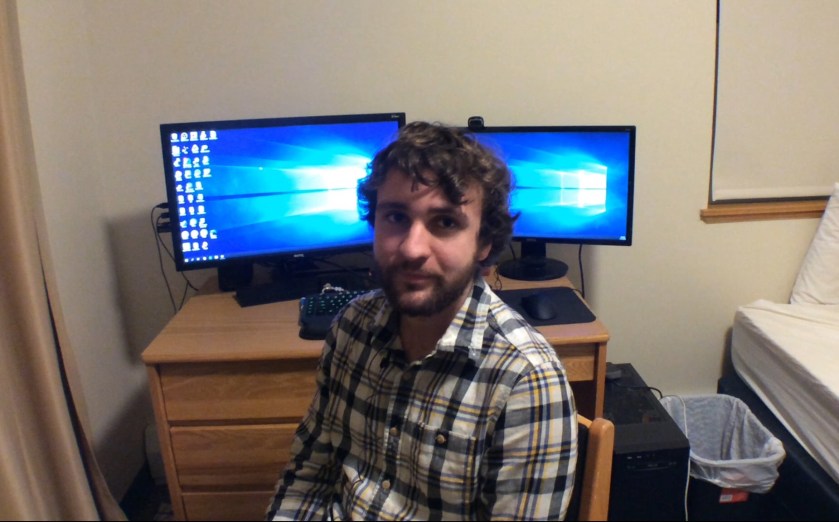
Esports is making its way to Ithaca College as well. Manny Sanchez is a freshman at IC and part of the college’s unofficial League of Legends club. The club doesn’t hold official meetings as it is still going through the process of legitimizing itself, but members like Manny are passionate about the game.





 Silas White