Sec+ 2.2 Notes

Virtual machine (VM) escape refers to an unauthorized user taking control of a host machine through a VM.

Container virtualization isolates and protects applications from other parts of the system and uses fewer resources than a standard virtualized system.

Virtualization sprawl is a phenomenon that occurs when the number of VMs on a network reaches a point where the administrator can no longer manage them effectively.

A public cloud model is maintained by a cloud service provider. The provider makes shared resources available to the general public over the internet.

A private cloud is defined as computing services offered either over the internet or within a private internal network. Only certain authorized users can access private cloud infrastructure, such as employees in an organization. Resources are only for the organization. A little cloud within the cloud just for your organization.

A hybrid cloud model is an environment that uses a mix of public, community, and private cloud concepts with a single management platform.

A Community cloud is a collaborative effort in which infrastructure is shared between several organizations that share a common interest. For example, local public entities or locally clustered law firms might use a community cloud to save money.

A Software Defined Network (SDN) separates data and control planes in a network. It uses virtualization to route traffic to its intended destination, instead of using proprietary hardware.

A Virtual Private Network (VPN) extends a private network across a public network. It allows users to send and receive data from an internal network across a public network.

The Trusted Platform Module (TPM) is a hardware-based encryption solution that is embedded in the system and provides secure key storage for full disk encryption.

A Hardware Security Module (HSM) is a device used to generate, maintain and store cryptographic keys. It can be an external device and can easily be added to a system. The HSM will maintain the integrity of the key.

Saas – Software as a Service. Rather than installing software on client machines, SaaS acts as software on demand.

Paas – Platform as a Service. This is a marketing term used to describe the offering of computer platforms in the cloud.

IaaS – Infrastructure as a Service. Rather than needing data centers businesses can contract for utility computing as needed. Think Microsoft Azure or AWS.

Sec+ 1.1 Notes

With consensus/social proof impersonation, an attacker fools users into believing that a malicious website is legitimate by posting fake reviews.

In a hoax attack, an email alert or web pop-up will claim to have identified some kind of infection and include a download link to an antivirus. It’s actually a link to a trojan app.

Pharming is a way to redirect users from a legitimate website to a malicious one by corrupting the way the victim’s computer performs Internet name resolution.

SPIM – Spam over text/instant messaging app.

Sec+ Exam 1.8 Notes

Persistence, followed by further reconnaissance, occurs when the pen tester attempts to map out the internal network.

OSINT – Open-source intelligence gathering. Using web tools and social media to find out more about a target. This step is also called passive reconnaissance.

Having obtained a foothold on the network and performed internal reconnaissance, the next objective is to obtain a pivot point and compromise other network systems.

Purple Team- A team comprised of both red and blue teamers constructed to facilitate an excercise.

Cleanup – The last step after a hack. Includes removing logs, backdoors, tools, and any other evidence of the hack.

Better Help and Mental Health

mental-health-3337026_1280
Photo courtesy of Pixabay.com under the Creative Commons

If you’re into the YouTube scene, you may be aware of the website betterhelp.com, which offers cheap online therapy with licensed therapists. It’s been promoted by several prominent YouTubers, the most influential of whom is probably Philip DeFranco. If you want to be caught up to speed, give this Polygon article a quick read. Or, watch this PewDiePie video (Yes, PewDiePie. I know what you’re saying to yourself, but he makes some solid points even if the overall presentation is silly.)

I’d just like to take the time to say if you feel you need to see a therapist, counselor, psychologist, or other mental health professional, please see what your available options are for in-person visits near you. Mental health issues should not be treated lightly, and I re-iterate that you should seek treatment just the same as you would for a physical health issue.

In our current climate, at least for young adults, mental health issues have become fetishized. People claim that it’s never been easier to talk about mental health issues, but in reality there is still a huge stigma around it. It’s still painted in a false light in the media in both news and entertainment, and it’s still hard to have a conversation about it.

Given this difficulty, and the ease of access of using the internet, I can see why people might find Better Help attractive. User reviews on Better Help seem mixed however, and dependant on the specific therapist. There’s not enough information to claim Better Help is acting maliciously, as some might suggest. But I can’t help but feel a sour taste in my mouth that so many YouTubers shared a potentially damaging site that is unsure of its own identity. As PewDiePie points out (again, I know) the site both claims to be a substitute for seeing a therapist in person, but also says in its terms and conditions it is not a substitute for seeing a therapist in person. Therapy is not something that should be mass produced and consumed.

In the end, if there is a lesson to be learned it is to always have a healthy dose of skepticism. If something sounds too good to be true, maybe it is.

After all, you don’t want to be known as the person who jumped on a bandwagon only to be exposed by PewDiePie. Right?


Rockstar Employees work “100-hour weeks”

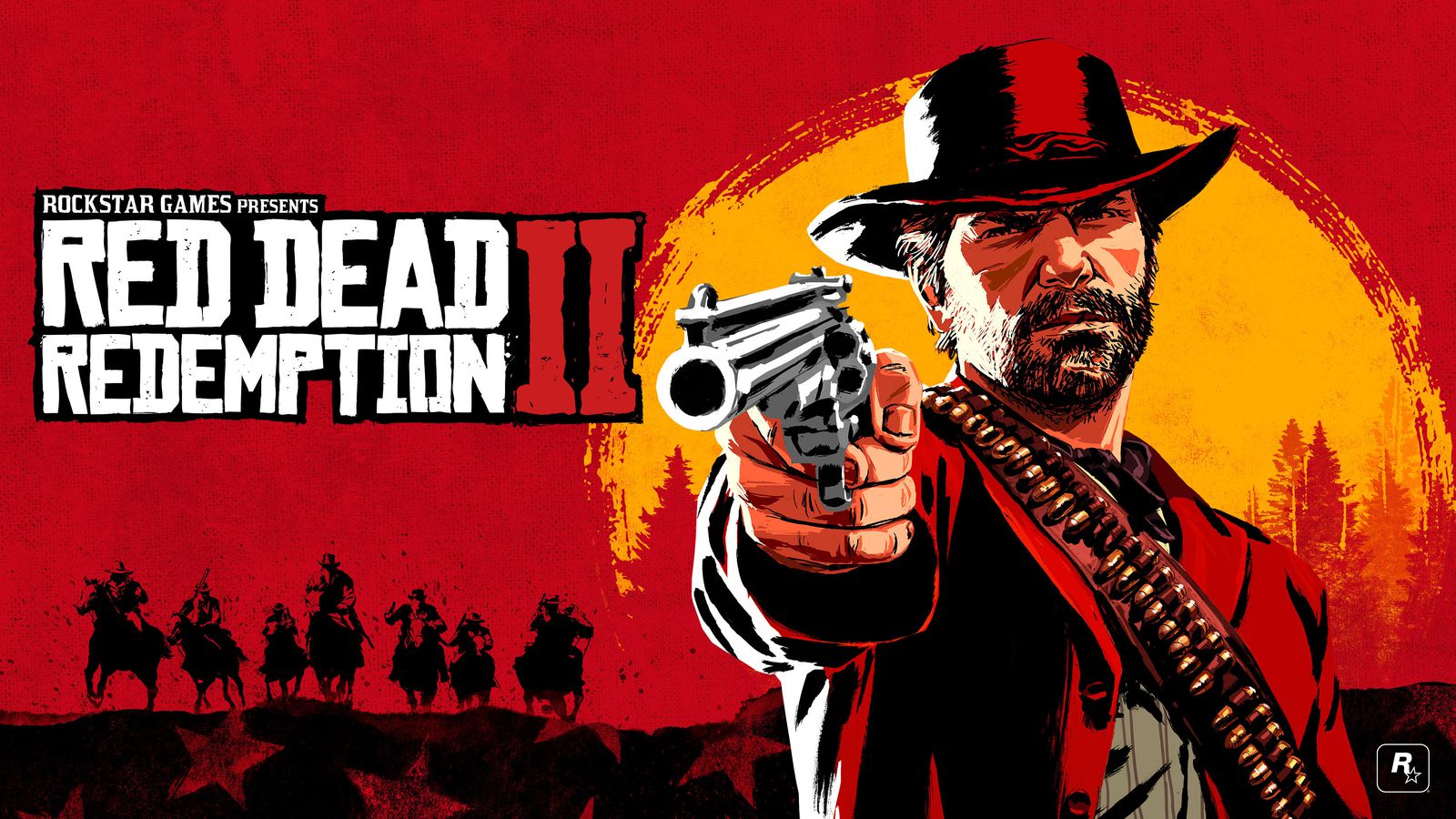
Rockstar co-founder Dan Houser has recently gotten flack for a comment he made in a Vulture article, that Rockstar employees worked several “100-hour weeks.” On social media, this sparked a conversation over the “crunch” period of video game development, where developers are often forced to work long hours without overtime pay to meet a deadline, … Continue reading “Rockstar Employees work “100-hour weeks””

rdr2-officialart-3840x2160
Photo Courtesy of Rockstar Games

Rockstar co-founder Dan Houser has recently gotten flack for a comment he made in a Vulture article, that Rockstar employees worked several “100-hour weeks” during the final leg of development for Red Dead Redemption 2. On social media, this sparked a conversation over the “crunch” period of video game development, where developers are often forced to work long hours without overtime pay to meet a deadline, and also sparked a conversation about American work ethic in general. Houser later clarified in an interview with Kotaku that nobody was forced to work these hours and that it was done voluntarily by only a few senior level employees. In general, this sentiment has been echoed by Rockstar employees on social media.

There is a larger conversation to be held around how deadlines and “crunch” work in the video game industry in general. The video game industry is the only entertainment medium I can think of where release dates are set years in advance — and regularly broken. As consumers, we’ve grown accustomed to seeing games delayed, or undergo radical change, far beyond the original deadline. Looking at you Square Enix.

Some companies, like Blizzard, eschew from this problem by releasing games “when they’re done” and not setting a release date ahead of schedule. It’s harder to generate hype and regularly market your game when there is no release date, but a company might eliminate the potential backlash that comes from a delay, or avoid the “crunch” period of several weeks of overtime to meet an arbitrary deadline. On the other hand, a deadline could be seen as necessary motivation.

Does this model need reform, or is it fine as is? Is “crunch” a necessary evil, or a product on an unhealthy work environment?

Sony Finally Allows for Cross-Play

8704d4d5ffd1c315ac8e2c805a585764
Courtesy of Epic Games

Sony has finally allowed for cross-play through Fortnite, something fans have long been requesting. The official story is that Sony had been doing internal testing to make sure the feature would function properly, and while many fans (including myself) speculate there may have been a monetary reason behind the delay, our skepticism matters not because cross-play has finally happened.

While for now we can only play Fortnite cross-console, the future holds exciting potential if Sony continues this trend. Overwatch between PS4 and Xbox One? Rocket League? Minecraft? The potential is unlimited.

I wouldn’t hold my breath, knowing Sony, but I can’t help but feel some excitement. What game would you like to see made available for cross-play?

Does Andrzej Sapkowski really deserve $16 Million?

dims
Photo courtesy of CD Projekt Red

I’m here to talk about CD Projekt Red again! I promise this isn’t a CD Projekt Red fan-blog, but after I saw this story I wanted to dissect it.

I’ll link Digital Spy’s story here, but the short version is that author of The Witcher novels and short stories, Andrzej Sapkowski, is suing the developers of The Witcher video game series, CD Projekt Red, for royalties. Sapkowski was offered a chance to earn royalties on franchise sales a little over a decade ago, but opted instead for a one-time payment of roughly $9.4k. Sapkowski told Eurogamer “They offered me a percentage of their profits. I said, ‘No, there will be no profit at all – give me all my money right now! The whole amount.’ It was stupid. I was stupid enough to leave everything in their hands because I didn’t believe in their success. But who could foresee their success? I couldn’t.”

The lawsuit is, of course, taking place in Poland where both parties reside. There is a legal basis for the suit, Article 44 of Poland’s Act on Copyright and Related Rights states that in the event of gross discrepancy between an author and a licensee’s profits, the author is owed remuneration. I’ll be the first to admit I’m not an expert on Polish law, so I don’t know whether or not the case will go to trial.

What I do know is that Sapkowski was given the opportunity to receive royalties, and denied it for a lump sum of cash. Sapkowski didn’t seem to mind this deal until now, roughly 2.5 years after the release of the Witcher 3: Wild Hunt, and roughly 11 years since the release of the first game. Sapkowski, by his own admission, was not conned or swindled into this contract, and actually proposed it himself because he didn’t believe the video game would be successful.

Is Sapkowski entitled to $16 million? I’m not sure how the court will react to his previous statements, but the lawsuit seems like an antagonistic move solely motivated by money. I find it hard to believe the games didn’t have any impact on book sales, or that the success of The Witcher 3: Wild Hunt didn’t have anything to do with the upcoming Netflix series.

What do you think? Does Sapkowski have a case? Should CD Projekt Red try to settle with him?


Welcome

Full disclosure, I’m starting this blog for my Mobile and Social Media Journalism class. My first assignment is to post about our readings and the state of journalism, so here we are.

With the advent of social media and mobile devices, journalism has changed and will never be the same. While you may agree or disagree with the statement that anyone can be a journalist, the truth is that professional journalists will never be able to take the same approach as the journalists who came before them.

The positives of this change are that journalists can talk to their audience in real time, and that content can be driven by readers, rather than what an editor thinks is important. It’s never been easier to crowdsource, and it’s never been easier for a journalist to gather photos or videos from breaking events that they happened to not personally be at. The Miracle on the Hudson was one of the first examples of a story breaking on twitter from a non-journalist.

Of course, I’d be remiss if I didn’t mention the internet’s ability to allow users to quickly publish anything they want, factual or not. We’ve all heard of fake news, which in this case I’ll define as stories that are deliberately fabricated as an effort to troll or push an agenda. You can read a story here from New York Magazine about a twitter troll that spread false information during Hurrican Sandy.

As a journalist, fake news can always be combated by verifying the facts before reporting. Journalists should make it a priority to be right instead of to be first. Overall, the rise of social media and mobile devices has made it an incredibly exciting time to be a journalist, despite what others might tell you.